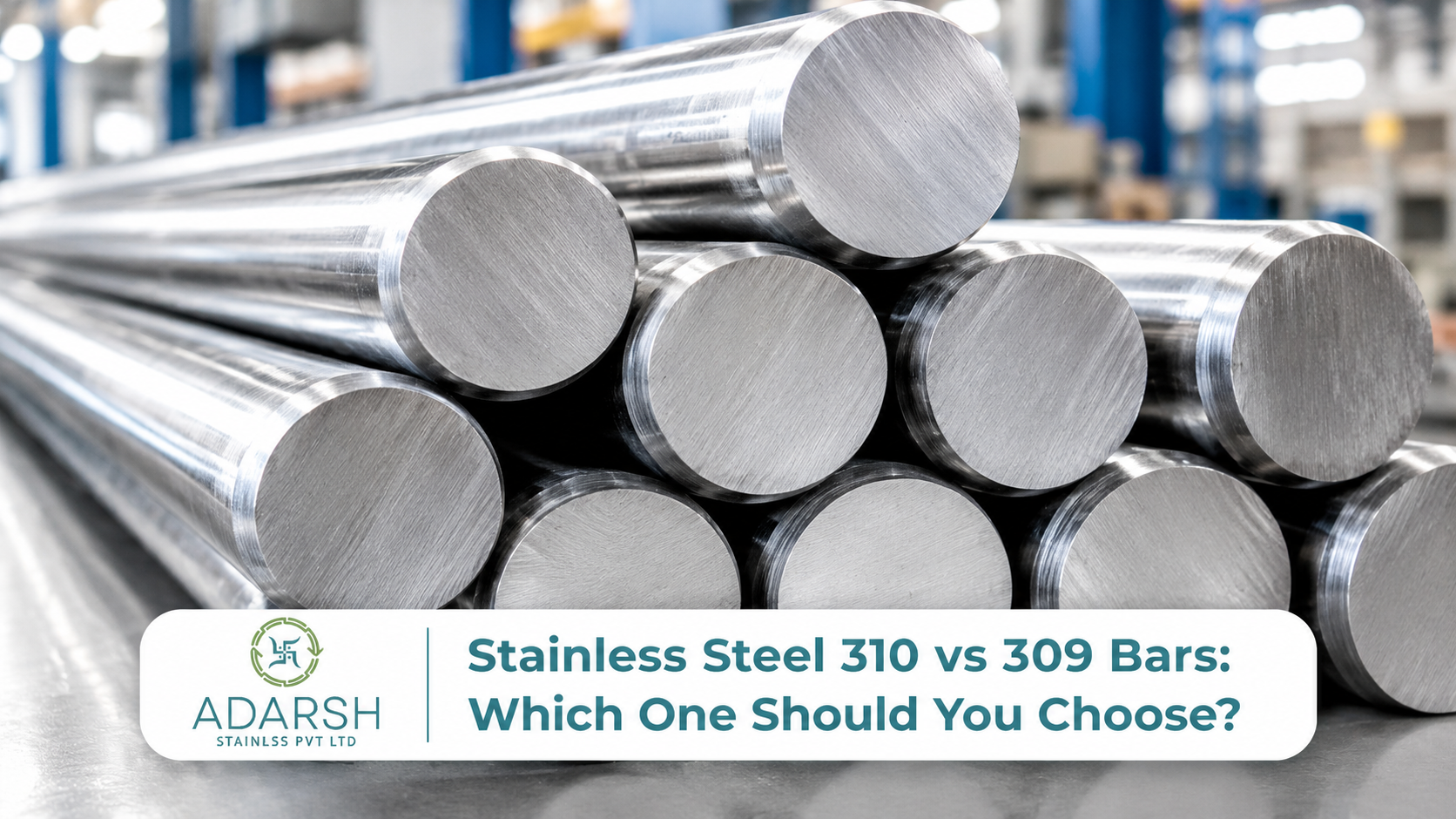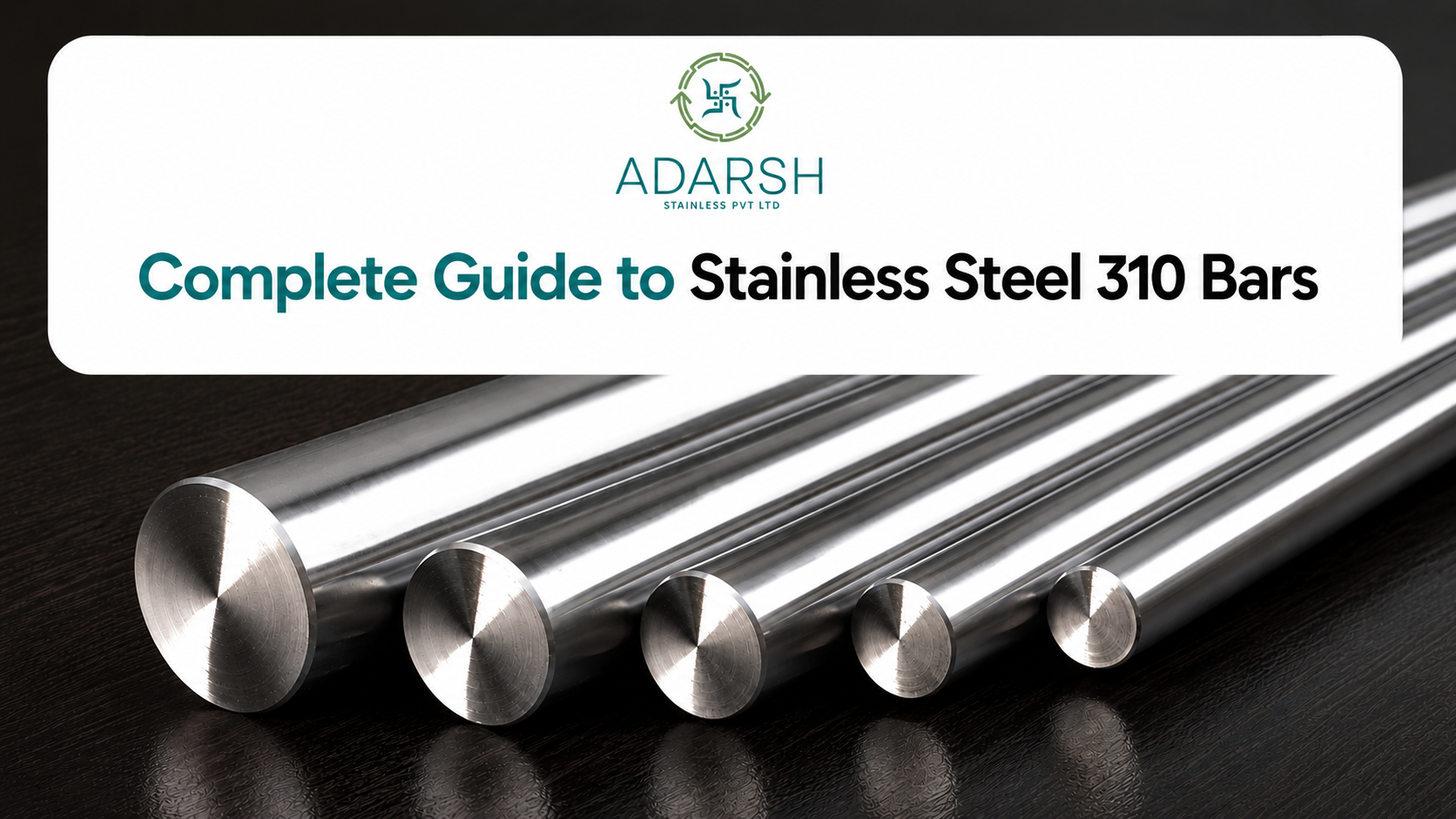
Stainless Steel 310 Bars handle continuous service temperatures near 1035°C and short bursts up to 1150°C without losing shape or strength. The chromium content falls between 24 and 26 percent, and nickel runs 19 to 22 percent, which gives this grade its oxidation resistance at high temperatures. Furnace builders, petrochemical fabricators, and power plant contractors specify this bar stock because ordinary 300 series grades scale and warp well before SS 310 shows any stress. This guide covers the properties, applications, and selection criteria buyers need before placing an order.
What Makes Stainless Steel 310 Bars Different?
Most austenitic grades lose strength above 800°C. SS 310 keeps working past that point because the higher chromium and nickel content forms a stable oxide layer on the surface. This layer stops scaling even during repeated heating and cooling cycles. Furnace rollers, radiant tubes, and heat treatment fixtures made from this bar stock survive years of cyclic service where 304 or 316 would crack within months.
Key Properties of Stainless Steel 310 Bars
Tensile strength runs at 515 MPa minimum, with a yield strength of 205 MPa and elongation of 40 percent. Density sits at 7.9 g/cm3. These numbers hold up even after long exposure to heat, which is not true for lower-alloy stainless grades.
| Property | Industrial Benefit |
| Heat Resistance | Stays stable at 1035°C continuous service |
| Oxidation Resistance | Cuts scaling, extends equipment life |
| High Strength | Handles heavy structural and furnace loads |
| Corrosion Resistance | Holds up under sulfur and chloride exposure |
| Good Weldability | Simplifies fabrication with standard filler wire |
Benefits of Stainless Steel 310 Bars
Furnace parts made from this grade run longer between replacements. Maintenance crews spend less time pulling rollers and fixtures for repair. Thermal cycling, the repeated heat-up and cool-down that cracks weaker alloys, does not damage SS 310 the same way. For plants running continuous kilns or batch furnaces, this cuts unplanned downtime. The higher raw material cost pays back over the service life, especially where a furnace shutdown costs more than the bar stock itself.
Industrial Applications of Stainless Steel 310 Bars
Heat Treatment Furnaces
Rollers, muffles, and radiant tubes inside heat treatment furnaces run at temperatures where 304 would fail. SS 310 bar stock is processed into these parts, maintaining dimensional accuracy even after repeated firing cycles.
Petrochemical Industry
Reactor internals and cracking furnace components face both heat and sulfur compounds. SS 310 resists both at once, which single-purpose alloys often cannot.
Power Generation Plants
Boiler supports and heat recovery steam generator components need to hold shape under constant thermal load. This bar stock maintains its shape across thousands of heating cycles.
Chemical Processing Equipment
Reactor vessels and agitator shafts exposed to hot acidic vapours need a grade that resists oxidation and chemical attack. SS 310 covers both requirements in one material.
Cement and Glass Manufacturing
Kiln shells and glass furnace fixtures operate above 1000°C for years without shutdown. SS 310 bars machined into brackets and supports handle that heat load directly.
Industrial Burners and Thermal Processing Equipment
Burner nozzles and thermal processing fixtures face direct flame contact. SS 310 keeps its shape where carbon steel or 304 would deform within weeks.
Why Stainless Steel 310 Bars Excel in High-Temperature Applications
Scaling resistance comes first. The chromium oxide layer that forms on SS 310 does not flake off under thermal cycling the way it does on lower-chromium grades. Mechanical stability follows close behind, since the bar retains most of its yield strength even at 800°C. Add resistance to sulfur attack and carburization, and the result is a material that keeps running in furnace and kiln environments where other grades need frequent replacement.
Stainless Steel 310 Bars vs Stainless Steel 304 & 316 Bars
| Feature | SS 310 | SS 304 | SS 316 |
| Heat Resistance | Excellent, to 1035°C continuously. | Moderate, to 870°C | Good, to 925°C |
| Oxidation Resistance | Excellent | Good | Good |
| High-Temperature Service | Best choice | Limited | Moderate |
| Typical Applications | Furnaces, kilns, heat treatment | General fabrication | Corrosive liquid environments |
304 costs less and works fine for kitchen equipment or general structural work. 316 adds molybdenum for better resistance to chlorides in liquids. Neither holds up to sustained furnace heat the way SS 310 does.
How to Select the Right Stainless Steel 310 Bars
Start with the actual operating temperature, not the rated maximum. Check whether the environment adds sulfur compounds, chlorides, or carburizing gases on top of the heat. Confirm the mechanical load the bar carries once installed, since a support bracket and a rotating shaft need different tolerances. Fabrication method matters too, and TIG or MIG welding work on this grade with matching filler wire. Weigh lifecycle cost against upfront price last. A bar that lasts three furnace campaigns instead of one often costs less per year of service.
Industries That Benefit Most from Stainless Steel 310 Bars
Heat treatment shops rely on SS 310 for furnace internals that see daily thermal cycling. Petrochemical plants use it in reactor and cracking unit components exposed to heat and sulphur together. Power generation depends on this grade for boiler and heat recovery hardware. Cement plants specify it for kiln fixtures that run continuously above 1000°C. Glass manufacturers use it in furnace supports and feeder components. Industrial furnace equipment builders choose SS 310 as their default for radiant tubes, muffles, and burner parts because it holds tolerance after years of service.
Conclusion
Stainless Steel 310 Bars combine heat resistance, oxidation resistance, and mechanical strength that lower grades cannot match at elevated temperatures. Furnace builders, petrochemical fabricators, and power plant contractors keep specifying this grade because it survives thermal cycling that cracks 304 and 316 within months. Check the product page for available sizes, finishes, and full specification sheets before placing an order.